Sunset in Sintra
This past weekend, I visited the famous Pena Palace in the medieval town of Sintra. Constructed in 1854 by German Prince Ferdinand as a ‘gift’ to his new Portuguese subjects upon his engagement to Queen Maria II. The palace draws inspiration from of all the great eras of Portuguese architecture, and it is so fantastical you’d think it was designed by an AI. The architecture alone paints my imagination of Prince Ferdinand as the kind of guy that would disappear in the forest for days and come back covered in dirt and exclaim, “I HAD AN EPIPHANY!” — it’s dreamlike.
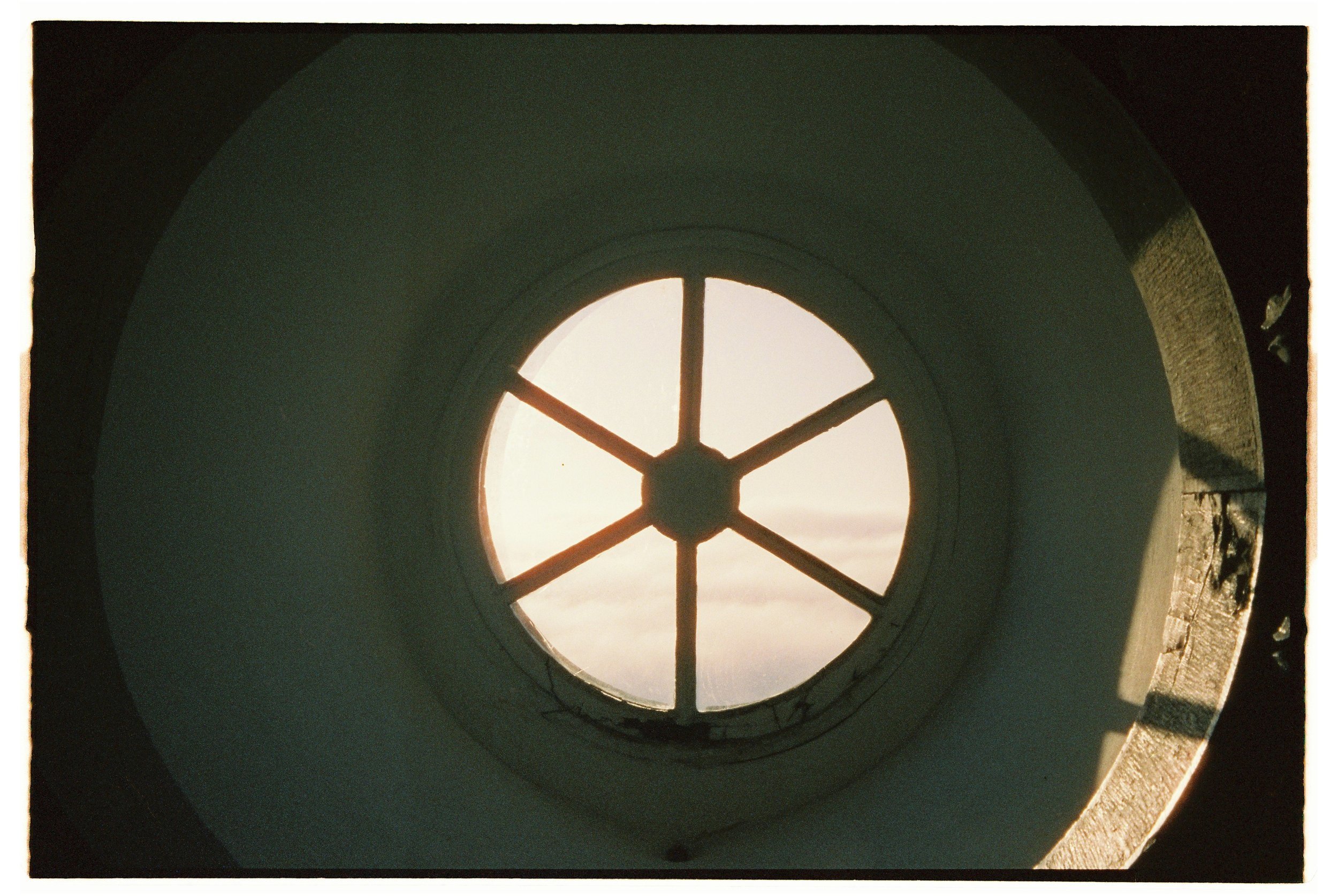
By the time we arrived at the palace gates, it was mid-afternoon. I meandered through the nautical themed bedrooms, exquisite dining rooms, and the courtyard enclosed in hand-painted tiles (blue and white). As I was ascending the winding stairwell, I was beckoned by a round window with a view. I let people pass — they were more interested in the castle’s interior— and when I was alone, I crawled into the window nook.
Imagine you’re in an airplane that is taking off through the clouds during the most beautiful sunset you’ve ever seen. Now imagine instead of being in a metallic aircraft filled with strangers pummeling through the sky, you’re sitting against a huge circular window, alone, in a nook carved into the wall of a castle. You’re high up on a mountain, before you is nothing but light blue sky and clouds floating below the castle walls, and the sun starting to set. You can imagine, it all begins to feel a little unreal. From the corner of my eye, I saw a terrace where people were basking in the late afternoon light. Just then, I heard people coming up the stairs, so I hopped out of the nook, went straight to the top floor, and opened the door.
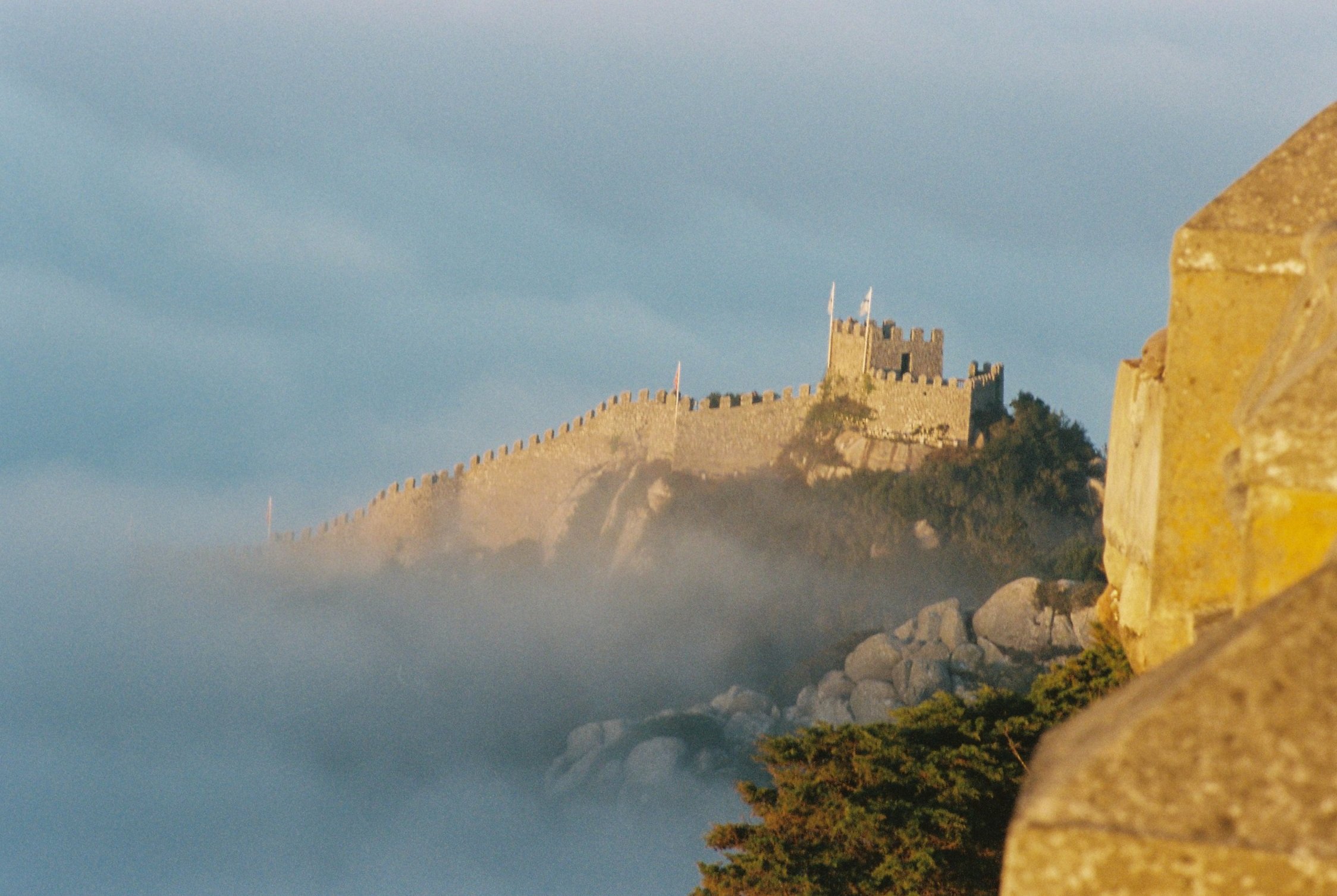
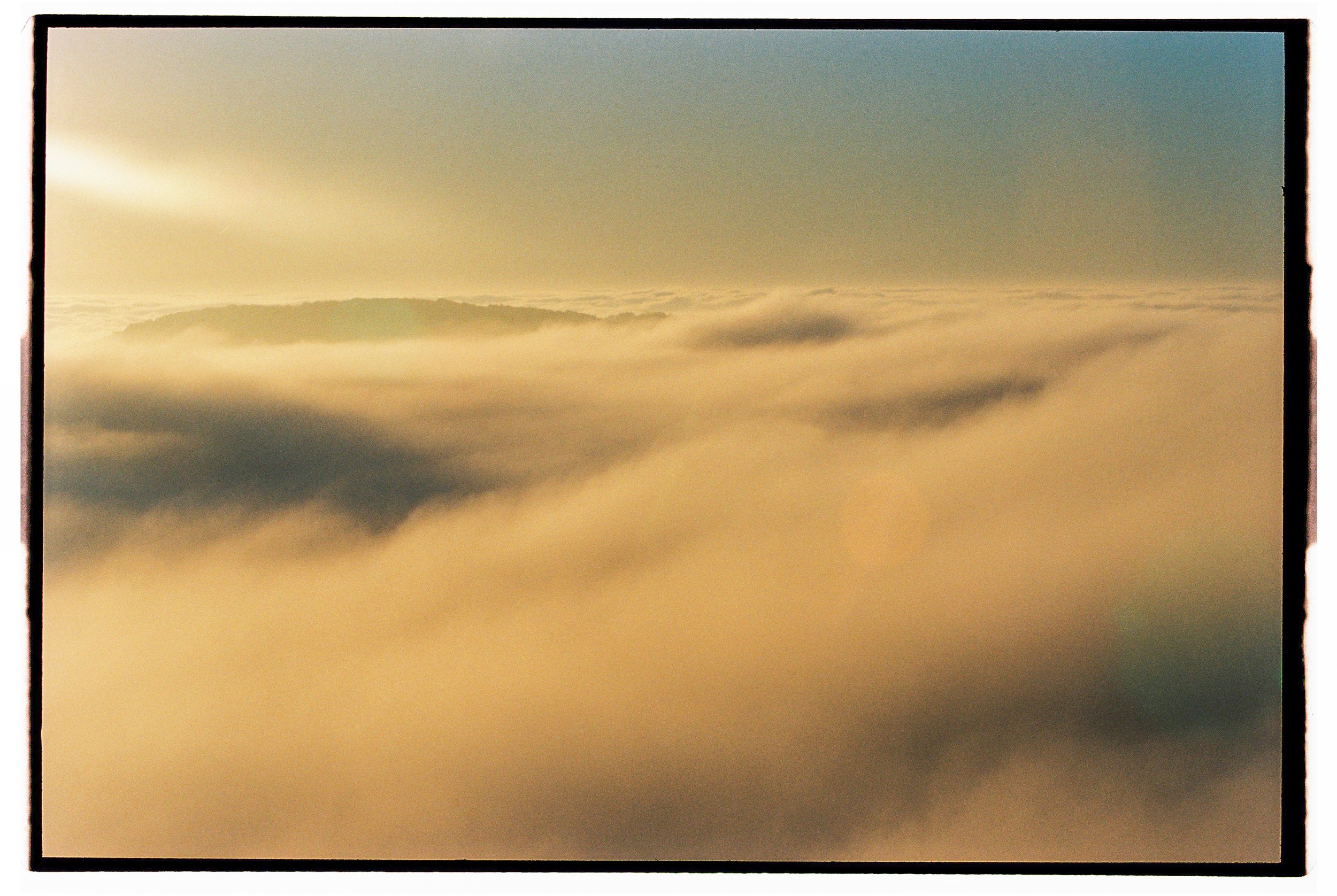
The sun hung just above the clouds, which were floating below us in a neat blanket. The only indication of earth’s surface were the tops of the trees poking through the clouds. The fog from the surrounding forested valley was lapping up against the palace walls, and in the distance, a medieval moorish castle appeared to be floating.
As sun started to set, it stretched its arms for one final yawn, and we were graced with the most heavenly light the sun can conjure. Writing about it now, sunsets like this call to mind the phenomenon that occurs to a sick person just before dying. In their final days, they get a burst of energy so vibrant people think, ‘Wow, maybe this is a turning point.’ Or the phenomenon of the snake plant that blooms one single flower just before dying. Nature really has a way of saving the best for last.
The golden honey rays were thickened by the fog. The light had a robustness because of the moist air. The light bouncing off the red and yellow castle walls suffuse through the air and lifted everyone’s spirits, as well as as the pinks in their cheeks. I could literally feel the peoples’ excitement penetrating my skin and changing my chemistry. Even the security guard was taking pictures — he’d said he’d never seen a sunset like it. In a matter of minutes, the terrace became the closest looking place to heaven I have ever seen (and likely ever will see). I sat there on the ledge and tried to absorb every detail of the experience like a memory capsule, so I could transport myself back here for years to come. As the sun dropped into the clouds, the entire sky filled with an orange glow.
The moment was precious… and then I hit a ceiling. I couldn’t help thinking, is this it? Why wasn’t I feeling more? Why wasn’t I elated? Why wasn’t my inner world matching the beauty in front of me? This was, after all, the most beautiful sunset I had ever laid eyes on. I felt like I wasn’t doing the moment justice, like I wasn’t able to perceive the beauty before me at its true scale. I was witnessing something so beautiful, so breathtaking, and I felt limited in my capacity to take it all in. It was as if I wasn’t built to be able to experience this much beauty.
Then I thought about drugs, and how people take them in moments like this to heighten their senses and emotions. I didn’t like thinking people needed drugs to experience their life more deeply. It didn’t make sense. Then I remembered I had my headphones with me. (Music is a natural drug, no?) So I played a song near the top of my playlist, When We’re Older by James Blake, and it changed everything.
The first notes of the piano rushed into my ears like water through a dam and it felt like someone sprayed me with a clairvoyant mist. The landscape changed from looking like heaven to feeling like heaven. Finally, I could feel the sacredness of what was in front of - and especially around - me. My chest cracked open and started filling with emotions. Tears started curling in my eyes, and I felt unbearably grateful to be witnessing this beauty, greater than any I’d seen before, with my father.
Then something changed again. I began to see in my mind images and videos of the women, men, and children dying in Gaza that had flooded my newsfeed all that week. One video in particular came to mind, of a young boy no older than 4, on a makeshift exam table covered in debris. He was starring at his own hands, which were trembling. The fear in his eyes was deeper than his ability to grasp what had happened. He was grappling with the first moments of his reality becoming a living, breathing deadly nightmare. My tears that conjured from gratitude turned sorrowful, thick and hot as lava.
The sun was setting, and it was only getting more beautiful. But the more beautiful it got, the deeper my despair felt, and the harder I cried. The two feelings had never been so closely entwined, gratitude and despair; beauty and pain. Somehow, the beauty before me cleared the way for sympathy for the pain and suffering of people whose realities were concurrent, yet so vastly different from mine. With more appreciation came more despair for the Gazans who are buried under the rubble, who are carrying their brothers or sisters or children miles to the only hospital, for the people who are fearing that every minute is the last before they meet a cruel end.

I lied there on the ledge until the sun had set, and long after that. I watched people come up the steps and saw the way the sunset would fill their eyes and change their whole being. Everything in them relaxed and opened, their life sources became engaged and nourished. They’d stare with an affect of religious-like wonderment, take photos, even FaceTime loved ones, with feelings of love and awe so full they could spill over. Moms kissed their babies, husbands kissed their wives. The disparate levels of beauty and pain that exist in the world in a single moment is mind shattering. Half a million innocent people are being wiped off the earth in an act of colonialist genocide in the very same moment that I was taking in the most beautiful sunset I had ever seen. What the f*ck.
***
Arriving at that ledge, I had a specific idea of what I wanted to feel and what I thought I should be feeling. How could I have known that a feeling of such profound gratitude would strike a seemingly opposite feeling of profound sadness? Emotions can come from places in us that we are strangers to, places that we look away from — in my experience, the more I shy away from an emotion, the stronger it gets — but life is never really like the movies, even when it looks like one. The experience was a new one for me emotionally speaking. I know more clearly than before that moments of elation can have shadows of despair or melancholia, like watching a child grow up, and sometimes there is sadness in beauty and beauty in sadness.